Pergolas, Gazebos and Snow: Is It a Problem?
Our gazebos and pergolas are exceptionally sturdy, but heavy snow can still cause trouble. Learn how to clear it safely and protect your pergola all winter.
 František Kečkéš · Updated · 4 min read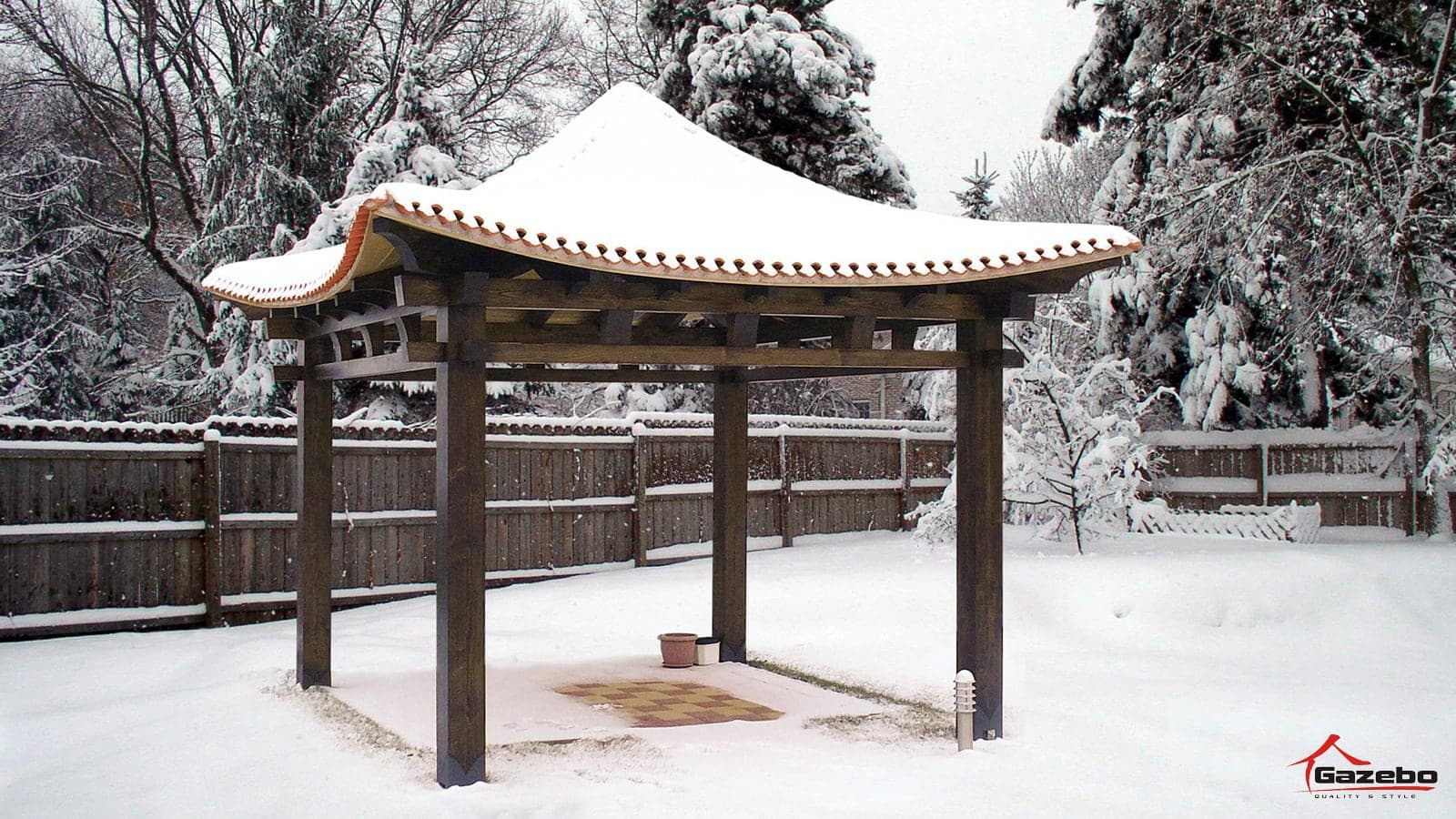
In short: Snow isn’t a problem as long as you clear the pergola regularly. Our aluminium pergolas cope with heavy loads — the Economic model bears 110 kg/m² and the Top Class model as much as 120 kg/m². Remove snow with a wooden or plastic rake, never with sharp or metal tools, and without salt or grit, which could damage the surface.
Pergolas and gazebos are popular features of outdoor spaces, providing a refuge from sun and rain and creating a pleasant place to relax. However, many owners worry about how well they cope with snow and ice during the winter months. In the next three sections, we’ll look at whether snow is a problem for pergolas and gazebos, and what steps you can take to extend the life and preserve the function of these structures.
If you’ve bought a garden gazebo or a pergola, we’re sure you want to enjoy it for as long as possible. The gazebos and pergolas from our workshop are exceptionally high-quality and durable. That doesn’t mean, though, that they need no care at all. In winter, a heavy layer of snow can cause problems.
First, it’s important to realise that the material a pergola or gazebo is made from plays a key role in its resistance to snow and low temperatures. Wooden structures are usually strong and able to withstand a considerable snow load, whether it’s softwoods such as pine or spruce, or hardwoods such as oak. However, wooden pergolas and gazebos require regular maintenance, such as coating with a protective treatment, to ensure their long-term durability. Aluminium and steel structures are also very resistant to snow and low temperatures, but it’s important to make sure they’re properly fastened and that the joints are protected from corrosion.
How to remove snow from a gazebo
Do you have an open gazebo? Then it’s exposed to bad weather both outside and in. To get the longest possible life out of it, take good care of it in winter. Naturally, pre-season maintenance and preparing the gazebo for winter are essential too. During the winter season, all that’s left is to keep clearing away the layer of snow that could damage the gazebo roof.
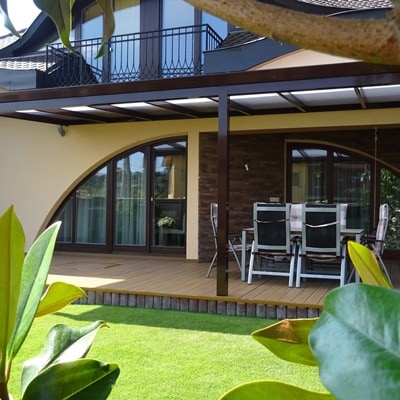
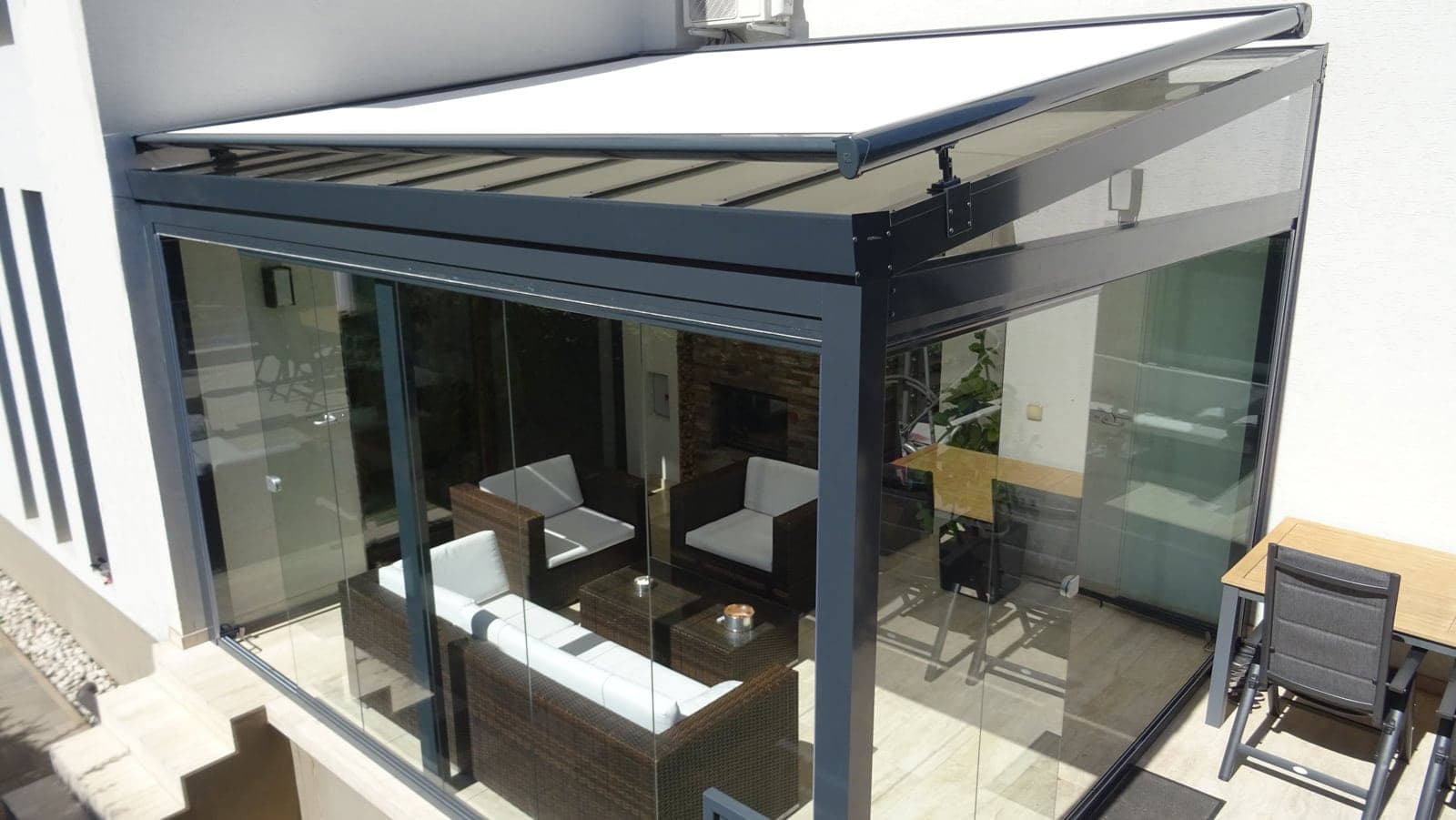
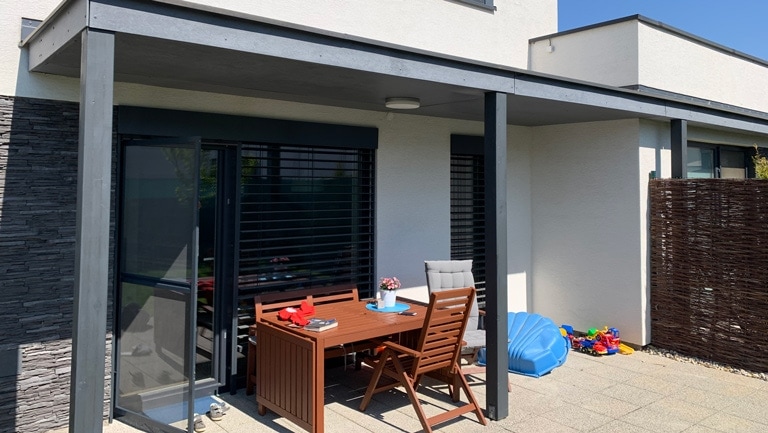
How to prepare a pergola for winter?
If you have your own terrace or garden with a pergola or gazebo, you’re probably wondering what happens to the garden furniture when winter arrives, and with it the snow. The winter season can be tough on your garden furnishings, but with a few solutions this problem can be successfully resolved.
If you have a bioclimatic pergola with rotating louvres, you can use it all year round, even when it’s snowing or raining. The louvres tilt, letting you adjust how much sunlight or shade there is. Thanks to this, you can enjoy a pleasant space on your terrace for relaxing and spending time with friends even in winter.
How to protect garden furniture?
If you have a classic pergola, it can be worth adding a shelter or a tarpaulin over it. This shelter can be made of wood or metal and can be used all year round. If it’s properly designed and installed, it can provide excellent protection from wind, rain and snow. On top of that, a shelter and tarpaulin will keep your garden furniture from being damaged so it can be used again in future.
Garden furniture can also be placed in spots protected from rain and snow, such as under a roof, in a garden shed or in the garage. If there’s no space to store the furniture, it can be covered with a cover or tarpaulin to protect it from moisture and other weather.
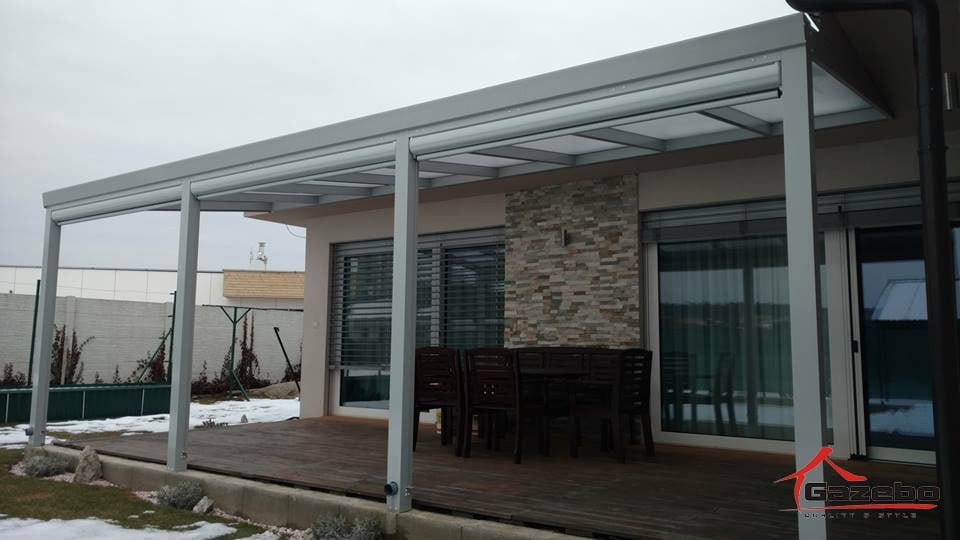
When removing snow from a gazebo, work very carefully, ideally in pairs. You’ll also need a ladder to reach the snow on the roof, so it’s a good idea to have someone “spotting” you. Use a wooden or plastic rake to pull the layer of snow down to the ground. Then clear the snow from around the gazebo so that, once it melts, huge puddles of water don’t form there. Remove snow regularly from inside the gazebo too.
Snow versus pergolas
In our climate, winter is unpredictable. Temperatures can be above zero one day, and the next you wake up to a snowy morning with a thick layer of snow. That’s the reality, especially in the northern districts of Slovakia. According to SHMÚ, snow cover lasts less than 30 days in southern Slovakia, 50 to 70 days in the basins, and more than 80 days a year in mountainous areas. That’s precisely why load-bearing structures are designed for a specific snow load under the STN EN 1991-1-3 standard, which divides Slovakia into five snow zones.
Our pergolas are suitable for every season, so they’ll handle winter too. Aluminium pergolas are built from a very strong structure that stands up well to bad weather. A slightly sloped roof, which lets the snow slide off, also helps.
That said, a heavy snow event can be a problem. What’s the maximum load Gazebo pergolas can handle? For the Economic aluminium pergola, for instance, it’s 110 kg per m², and for the Top Class aluminium pergola it’s as much as 120 kg per m² — which really is a lot. Even so, it’s best not to leave a thick layer of snow on the pergola. Wet snow is genuinely very heavy.
Removing snow from a pergola is easy and you’ll manage it very quickly. Use a wooden or plastic tool — ideally a rake. Break up the layer of snow on the pergola and push it down to the ground.
If your pergola is joined to the house and there’s a window above it, you can make things even easier and push the snow off with a tool straight from the window rather than from the ground. Don’t use sharp or metal tools, so you don’t scratch the pergola!
We don’t recommend spreading grit or salt on either a wooden or an aluminium pergola to thaw the ice, as you could damage the surface. So how do you remove ice? The best approach is to try to break up its structure — tapping it gently to break it into smaller pieces and then removing those bit by bit. This is more demanding work, though. So be extremely careful!
Frequently asked questions
Is a bioclimatic pergola suitable for winter?
Yes, a bioclimatic pergola with rotating louvres can be used all year round thanks to the ability to adjust how much sunlight or shade there is.
How can you protect garden furniture from winter?
Garden furniture can be protected with a shelter, tarpaulin or cover, and can be placed in spots protected from rain and snow.
František Kečkéš
Founder of the family firm Gazebo. He has designed custom pergolas, gazebos and winter gardens since 2009 — from the first sketch through production to installation.
Free consultation →